Flagship
intervention
Our flagship initiatives focus on enhancing the well-being of construction workers through targeted support initiatives. By fostering a safe, inclusive and empowering environment, we promote dignity, improve quality of life and strengthen the resilience of the workforce that forms the backbone of the industry.
3 years
Our CSR framework
Flagship initiatives
Dedicated to the holistic welfare of construction workers, migrant communities, and the unorganised sector, these initiatives provide essential support to families through targeted healthcare, education, and skill development.
Strategic thematic programmes
Our strategy is anchored in five core thematic areas, designed to maximise the structure and impact of our interventions

Women empowerment
Strengthening opportunities for women through education, entrepreneurship, and skill-building programmes.

Education
Bridging learning gaps by enabling access to quality education, digital literacy, and infrastructure improvement.

Healthcare
Advancing public health and well-being through preventive healthcare initiatives and specialised support for vulnerable groups like elderly and specially-abled.

Environment
Driving sustainability efforts through afforestation, waste management, and renewable energy adoption projects.

Sports
Promoting grassroots participation and excellence in sports, including rural sports, Paralympic disciplines, and Olympic training programmes.
Healthcare
Pehel Wellness Wagon (Delhi NCR, Mumbai, Chennai, Chandigarh, Lucknow, Jaipur, Indore, Pune, Hyderabad, Bangalore, Thiruvananthapuram, and Ahmedabad)
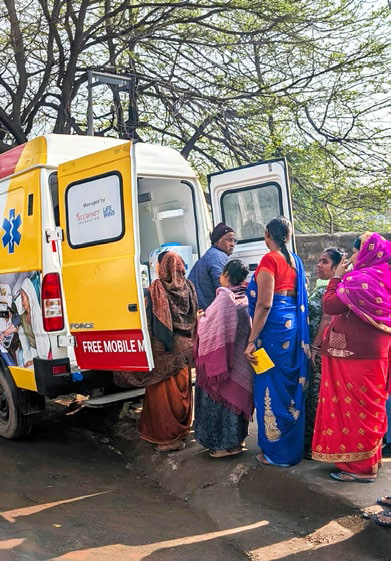
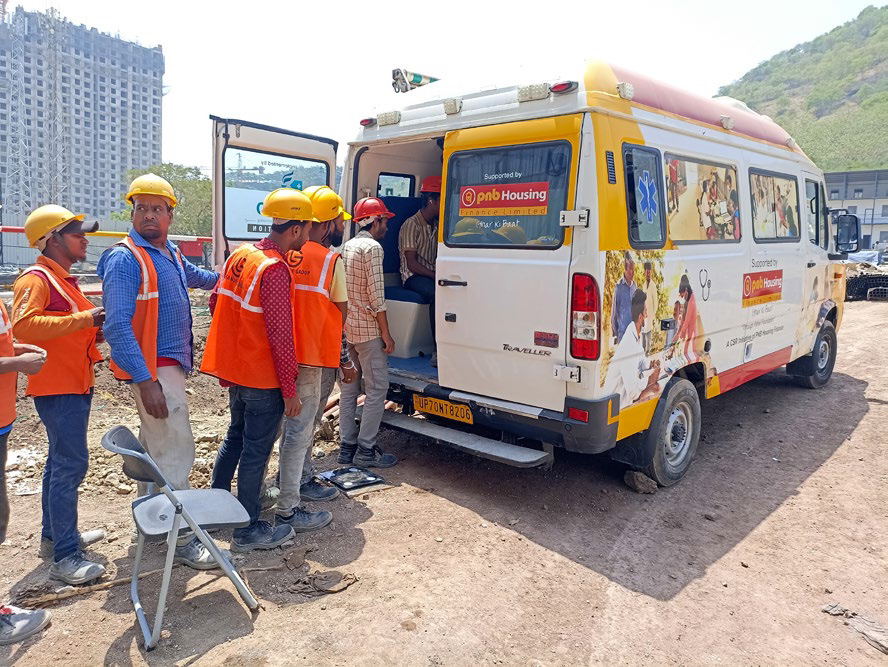
The Mobile Medical Unit (MMU) initiative delivers accessible, affordable, and preventive healthcare directly to construction workers and their dependents across India. This highly mobile and underserved population frequently faces barriers to formal healthcare. Our MMU initiative conducts on-site health camps providing professional medical consultations, essential medicines and health awareness sessions.
Education
Our Pehel Shiksha Scholarship has been initiated to provide merit-cum-means-based financial assistance to the children of construction workers and allied communities. Spanning from Grade 6 to undergraduate level, the initiative aims to reduce dropout rates and ensure educational continuity for economically vulnerable families.
The programme will support 1,500 children over a period of two years.
for girls
Women empowerment
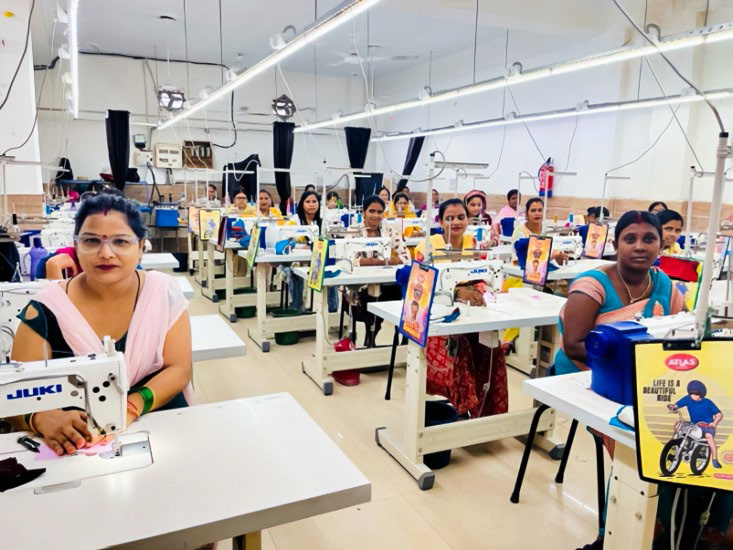
The ‘Skilling and Livelihood for Women from Construction Worker Households’ initiative addresses income instability and financial vulnerability by equipping women with market-relevant skills in tailoring and fashion design. This project provides a pathway to financial independence through training and direct placement support.
These placements are enabling women to earn a starting monthly salary of average ₹11,000, paving the way for greater financial independence and long-term economic empowerment. So far, 750 women have been trained since FY25, with a strong 98% placement rate.
Strategic
interventions
We drive structured, long-term social impact through five key thematic programmes: Women Empowerment, Education, Healthcare, Environment, and Sports. These initiatives are designed to address local needs, fostering community resilience and inclusivity. We aim to eliminate vulnerabilities, elevate well-being, and build an equitable, selfsustaining society.
Pehel Shakti — Women empowerment interventions
Our women empowerment initiatives foster equality, opportunity and independence through skill development, micro-enterprises, education, scholarships, healthcare and leadership programmes, creating pathways for inclusion, empowerment and sustainable growth.
Our initiatives have empowered ~4,000 women by fostering financial independence and stronger communities.
Scholarship for girl students at Miranda House — Delhi
Investing in the leaders of tomorrow, our scholarship project at Miranda House entered its second year of the three-year initiative. Scholarships were re-awarded to 165 girls from humble backgrounds, safeguarding their academic journey and enabling them to focus on professional opportunities.
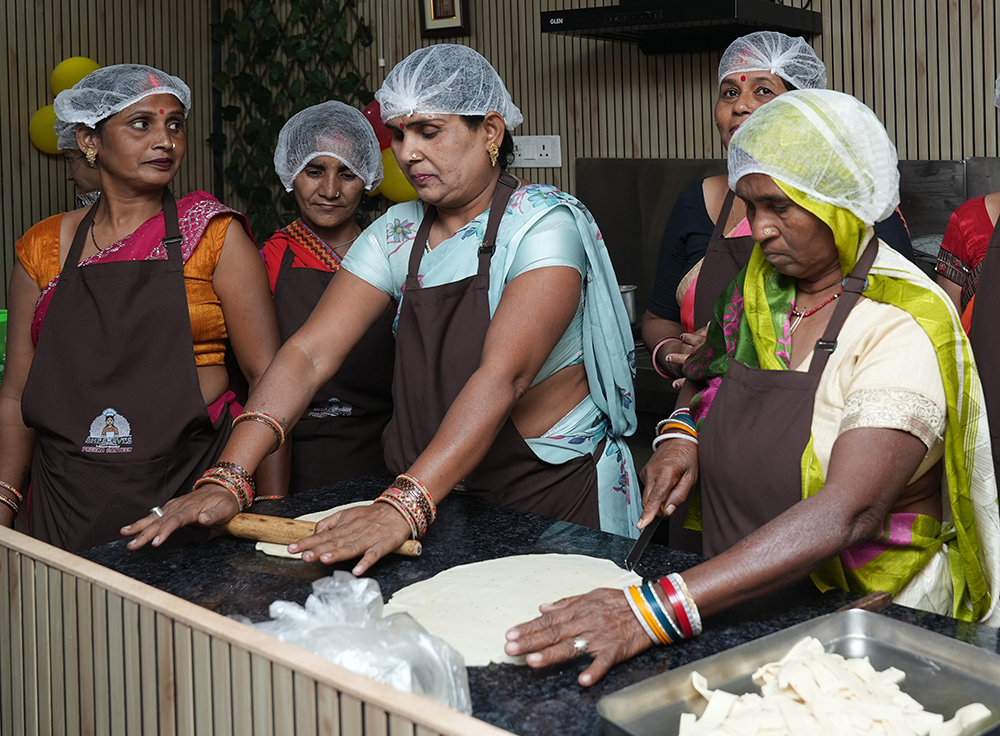
Promoting women-based micro enterprise development for sustainable growth in Brithala — Agra
The women-led dairy enterprise strengthened livelihoods for marginalised women by mobilising dairy farmers, establishing women-managed Milk Collection Centres and supporting 50 women, including 20 Production Sakhis and 30 Business Sakhis.
Dasa-Disa Bhavana: Empowering women in rural areas through cultural engagement — Tumakuru
The initiative delivers comprehensive support for community development through a dedicated learning and engagement space. Currently benefitting 30 women from local villages, the centre focuses on skill-building, leadership training, and cultural awareness.
Transforming government women ITI into a model ITI: A pathway to excellence — Hyderabad
Modernised infrastructure at the Government Quli Qutub Shah ITI for Girls, Hyderabad, improving education quality, accessibility and sustainability for 120 girls.
SHESERVES canteen, Lucknow
The initiative professionalised the women-led Pragati Self-Help Group operating at Vikas Bhawan, Lucknow. Addressed severe infrastructure gaps by providing a modern, fully equipped and hygienic Prerna Canteen.
REVIVE: Delhi circular textile hub for women in the rag-picking community — Delhi
We trained 50 women in plastic waste upcycling and handloom weaving, diverting over 140 kg of plastic waste from landfills to produce 90 metres of woven fabric.
Upgradation of female examination ward and sanitation at Rajiv Gandhi Government General Hospital — Alwar
The initiative improved access to gynaecological healthcare by renovating patient toilets and providing medical equipment, benefitting 200-300 female patients daily.
Project Nirmaan: Girls' hostel infrastructure renovation at Madan Mohan Malviya Government Ayurvedic College and Hospital — Udaipur
We modernised a girls’ hostel by upgrading sanitation, drainage, kitchen facilities and introducing solar-powered hot water and lighting.
Bakery unit training programme for Veer Naris and Families of Jawans — Delhi
We established a bakery training programme at the CRPF Campus, Delhi NCR, equipping 30 Veer Naris and CRPF families with skills to launch bakery enterprises.
Pehel Shiksha — Education interventions
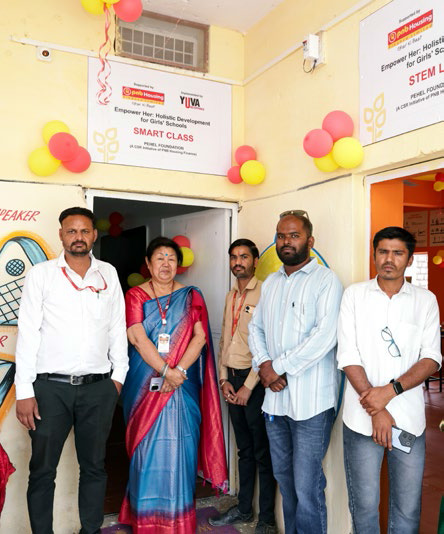
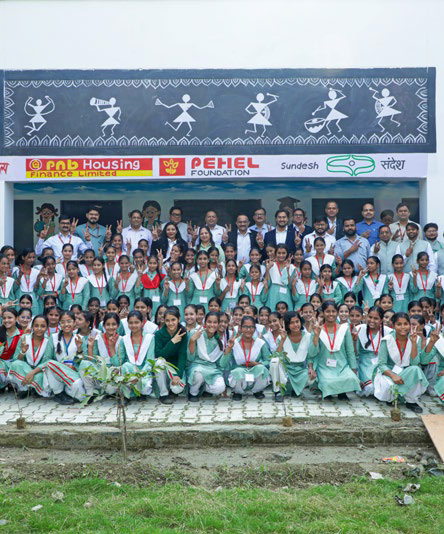
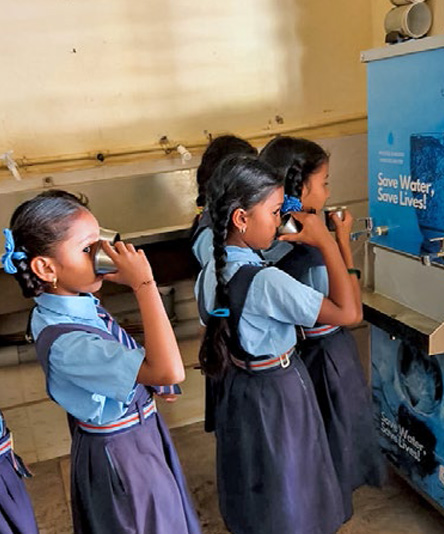
We are dedicated to advancing education through inclusive learning models that empower both individuals and their communities to drive long-term socio-economic progress. By implementing strategic interventions such as student scholarships, digital classroom rollouts, infrastructure modernisation, and facility upgrades, we have created a positive impact on over 10,000 students and teachers.
Digitalisation and RO water support to government schools — Bengaluru
This initiative aims to bridge the digital divide and foster a healthier learning environment across government schools in Bengaluru. We supported 11 government schools with water purifiers, and equipped five such schools with two Digital Interactive Panels, giving teachers access to modern e-learning platforms, educational videos, and interactive tools for providing better education.
Enhancing opportunities for Loreto Rainbow Home children through improved mobility — Kolkata
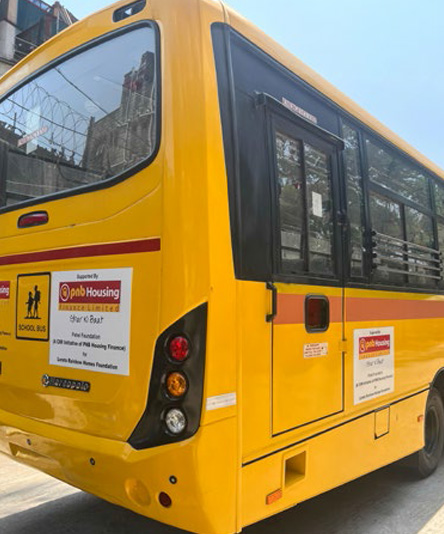
To ensure safe mobility, a dedicated 55-seater bus was provided, directly benefitting around 600 vulnerable and street-connected girl children. The transport infrastructure grants access to education, healthcare, and rehabilitative activities.
Setting up library and classroom infrastructure at Nrusingh High School & Junior College — Pune
The initiative has upgraded the classroom and library infrastructure at Nrusingh High School & Junior College in Pune. By introducing ergonomic, comfortable seating and refreshed study areas, the project has benefitted 300 students, improved daily classroom participation, and boosted overall attendance.
Project Parivartan: Transforming school into model school — Ghaziabad
To improve the quality of education and reduce girl drop-outs, an infrastructure upgradation project was executed across two government schools in Ghaziabad. At Nagar Nigam Balika Inter College (Kaila Bhatta), classrooms were refurbished with new flooring and fresh paint, sanitation facilities and equipment for the home science lab. The Nagar Nigam Balika Inter College (Makanpur) was improved with toilet blocks and a new shed over the assembly ground. Around 1,800 girls have been benefitted through this intervention.
Empower Her: Holistic development for girls’ schools — Neemuch
By modernising infrastructure and introducing eco-friendly technology, this transformation project upgraded two government girls’ schools in Neemuch, Madhya Pradesh. It established smart classrooms, STEM laboratories and dedicated play areas. Benefitting 1,100 students and 56 teachers, the drive has created future-ready learning environment.
PM Internship Project
There were five interns who successfully completed their internship in different divisions of PNB Housing Finance.
Pehel Khelo India — Sports interventions
Our sports initiatives promote inclusivity and talent development by supporting rural, Paralympic, Olympic and nationally recognised sports, enabling individuals to achieve their potential.
Supported ~65–75 athletes through the OGQ programme, providing training, rehabilitation, nutrition, equipment and performance support to enhance global competitiveness.
Pehel Swasthya — Healthcare interventions
Our healthcare initiatives strengthen access to quality healthcare through preventive care, maternal and child health, medical assistance, awareness and infrastructure, while supporting the elderly and specially-abled with inclusive, dignified care.
Upgrade healthcare at GMCH: Modern equipment for surgical and eye care unit — Guwahati
We enhanced diagnostic and surgical capabilities at GMCH, Guwahati, through advanced medical equipment, benefitting 300 patients and supporting up to 4,000 patients monthly.
Providing free primary healthcare through Mobile Medical Unit — Delhi NCR
This project delivers primary healthcare through a Mobile Medical Unit, providing consultations, diagnostics and free medicines to approximately 4,000 people till now.
Mobile eye care unit for the school students — Tumakuru
Our mobile eye clinic screened students across five taluks of Tumkur, identifying vision defects in 6,800 children, distributing spectacles and referring complex cases.
Upgradation of ophthalmology department at Kalyan Singh Government Medical College — Bulandshahr
By installing advanced diagnostic and surgical equipment at the medical college, we have modernised the facility, thereby increasing the diagnosis and treatment of eye disorders for about 60 to 70 OPD patients daily.
Upgrading living space for vulnerable persons — Gurugram
We developed a climate-protected shelter with sanitation facilities, 50 specialised electrical medical beds and two 20 KVA solar power systems, adding capacity for 100 individuals and supporting 700 residents.
Jal Saathi Project: Providing safe drinking water — Rewari
The Jal Saathi project delivers safe drinking water to Rewari villages through community-owned Water ATMs with advanced filtration systems.
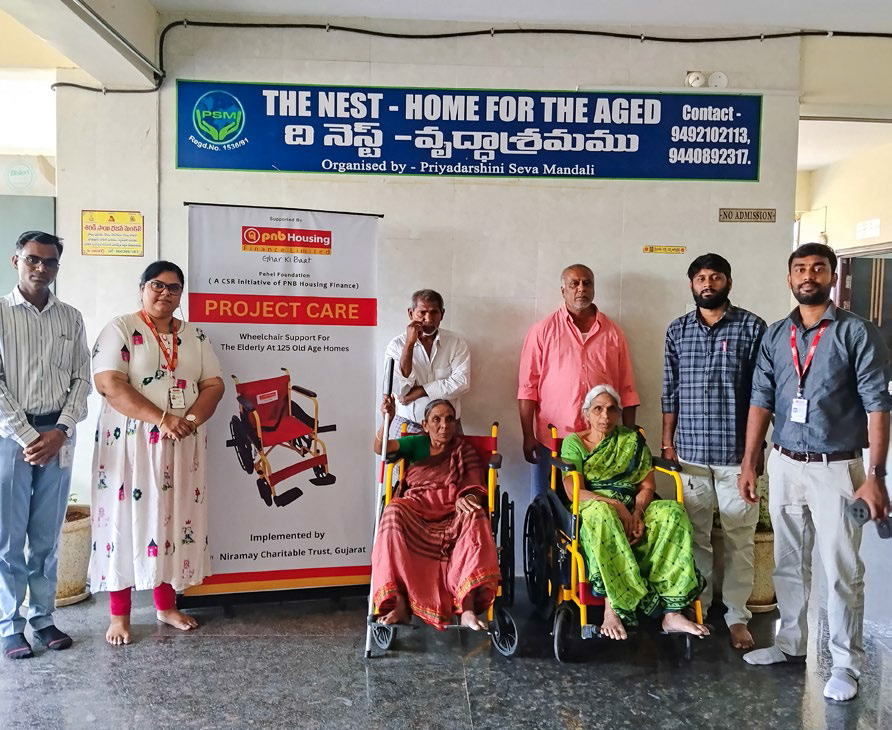
Project Care: 500 wheelchairs support to 125 old age homes
We distributed 500 specialised wheelchairs across 125 old age homes in nine states, benefitting approximately 5,000 residents.
Pehel Paryavaran — Environment interventions
We are committed to protecting natural resources through community-led sustainability initiatives focused on afforestation, waste management and the adoption of renewable energy.
So far, we have planted over 1.16 lakh trees and expanded clean energy access, thus contributing to a more sustainable and climate-resilient future.
Bio Composting Unit — Nashik
We established a bio-composting facility in Nashik, training around 20 women in waste management, bio-composting and green entrepreneurship while reducing landfill dependence and greenhouse gas emissions.
Tree Plantation Drive — Gurugram, Greater Noida, Chennai and Bahadurgarh
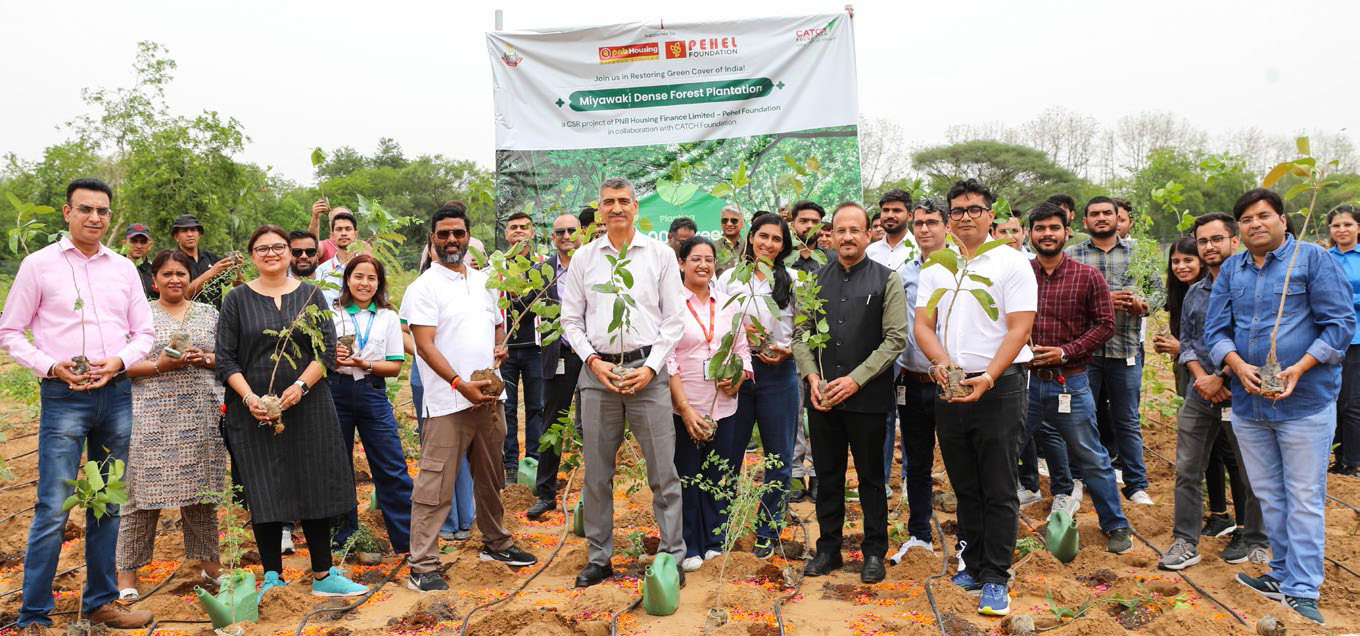
We undertook large-scale plantation and green space development initiatives across Gurugram, Greater Noida, Chennai and Bahadurgarh to enhance biodiversity, improve air quality and strengthen ecological resilience. We planted 10,000 trees in Gurugram, 1 lakh trees in Greater Noida, 12,000 saplings at ELCOT, Chennai, using the Miyawaki technique and native species. We are transforming a barren area in Bahadurgarh into a thriving green public space through plantation and supporting infrastructure. These initiatives contribute to urban greening, reduce heat stress, encourage community engagement and foster healthier, more sustainable environments.
Solar electrification support — Nainital, Pune and Bengaluru
We implemented solar electrification initiatives across Nainital, Pune and Bengaluru to improve access to reliable, clean energy while strengthening education, healthcare and community infrastructure. The initiatives included solar electrification of government schools and Primary Health Centres (PHCs), rooftop solar installations in eight government schools in Nainital, 110 solar streetlights to enhance safety and mobility, and solar power support for PHCs in Pune and Bengaluru, collectively benefitting over 1.2 lakh people.
These initiatives have ensured uninterrupted power for classrooms, computer labs, healthcare facilities, diagnostics, labour rooms, lighting and vaccine cold-chain storage, enhancing the quality of education, healthcare services and public safety. They have also reduced dependence on conventional energy sources, lowered operational costs and reinforced our commitment to environmental sustainability and inclusive community development.