A Board committed to purposeful oversight
Our Board of Directors bring a wealth of experience from diverse sectors including housing finance, banking, investment, economics, risk management, and fintech regulation. Their deep knowledge of financial markets and credit cycles positions the Company to navigate complexity and capitalise on growth opportunities. The Board committed to purposeful oversight plays a crucial role in guiding and governing the organisation and provides strategic direction.
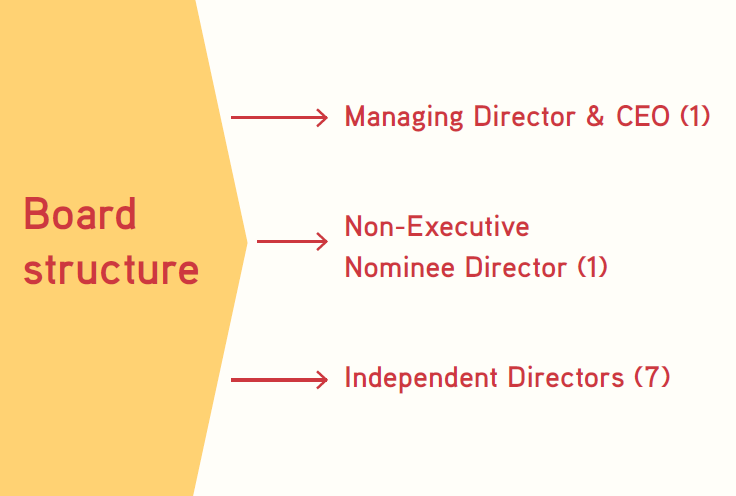
The Board is structured to ensure independence, diversity, transparency, accountability and a balance of perspectives. Members actively contribute to strategy formulation, risk oversight, compliance and ESG integration.

Average age of Board members
Average experience of Board members
Average tenure in the Company
Guiding the Company's strategic direction
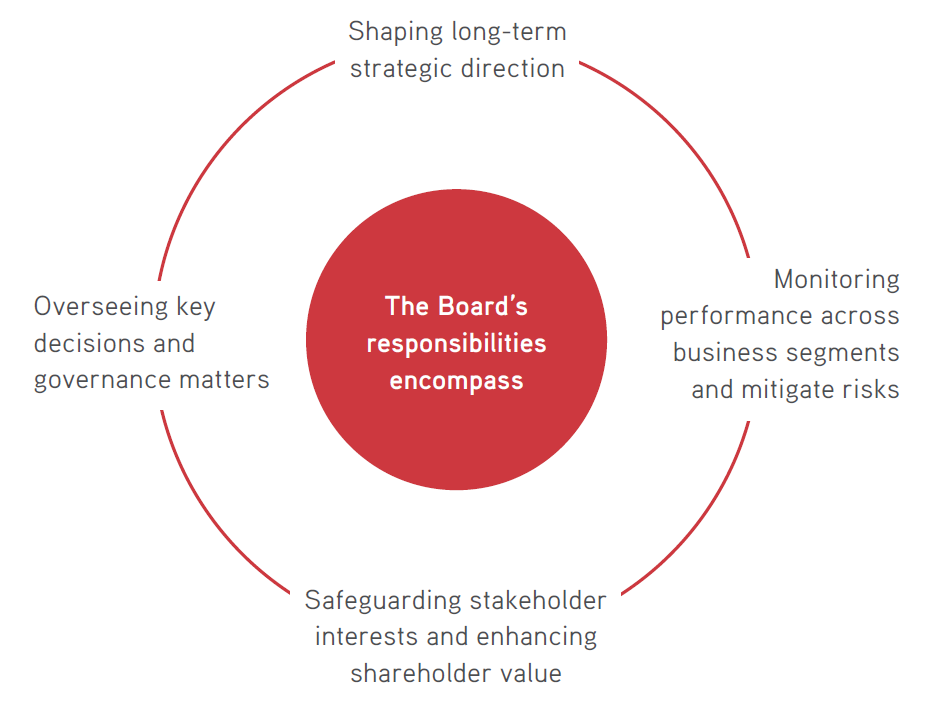
All significant decisions are taken based on a formal schedule and in alignment with statutory and regulatory mandates. The Board operates through multiple committees including the Audit Committee (AC), Risk Management Committee (RMC), Nomination & Remuneration Committee (NRC), and the Corporate Social Responsibility Committee (CSR), among others.
- Audit Committee
- Risk Management Committee
- Credit Committee
- Nomination and Remuneration Committee
- Stakeholders Relationship Committee
- Corporate Social Responsibility Committee
- IT Strategy Committee
- Special Committee for Monitoring and Follow-up of Frauds
- Consumer Protection Committee
Ethics at the core
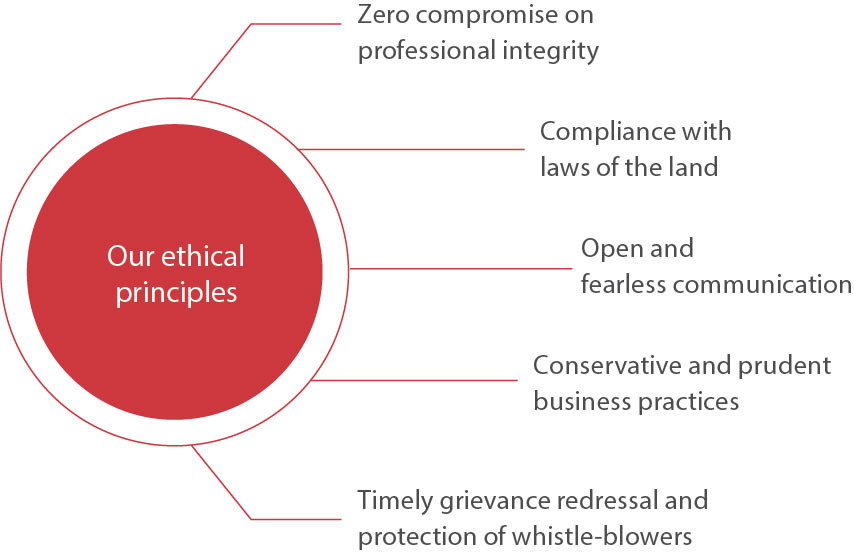
At PNB Housing Finance, ethics are nonnegotiable. We believe in doing the right things and aim at enhanced reputation, increased trust and positive work culture. We have adopted comprehensive Codes of Conduct applicable to our Non-Executive Directors (including Independent Directors), Executive Directors, and senior management. These codes articulate professional and ethical conduct and are in alignment with regulatory guidelines.
Our ethical principles
The Whistle-blower Policy provides direct access to the Audit Committee Chairperson and safeguards whistleblowers from retaliation, protects their identity and ensures confidentiality.
Retention GEM initiative
This initiative reflects our core values—People First, Customer-Centricity, and Ethical Standards. It empowers employees to proactively retain customers by offering responsible solutions while adhering to ethical boundaries. Every customer interaction under this programme is subject to a clear set of internal approvals and oversight, ensuring ethical alignment and compliance.
Leadership that drives accountability
Leadership at PNB Housing Finance is not defined by hierarchy but by accountability, inclusion, and purpose. Our Annual Operating Plan (AOP) process includes cross-functional leadership engagement to align goals and numbers with the Company's broader mission.
These are further cascaded through events like the Annual Sales Kick-off and regular Town Halls.
Our flattened structure enables open dialogue and decentralised decision-making—promoting a culture where policies and strategy are communicated clearly and consistently.
Robust risk management
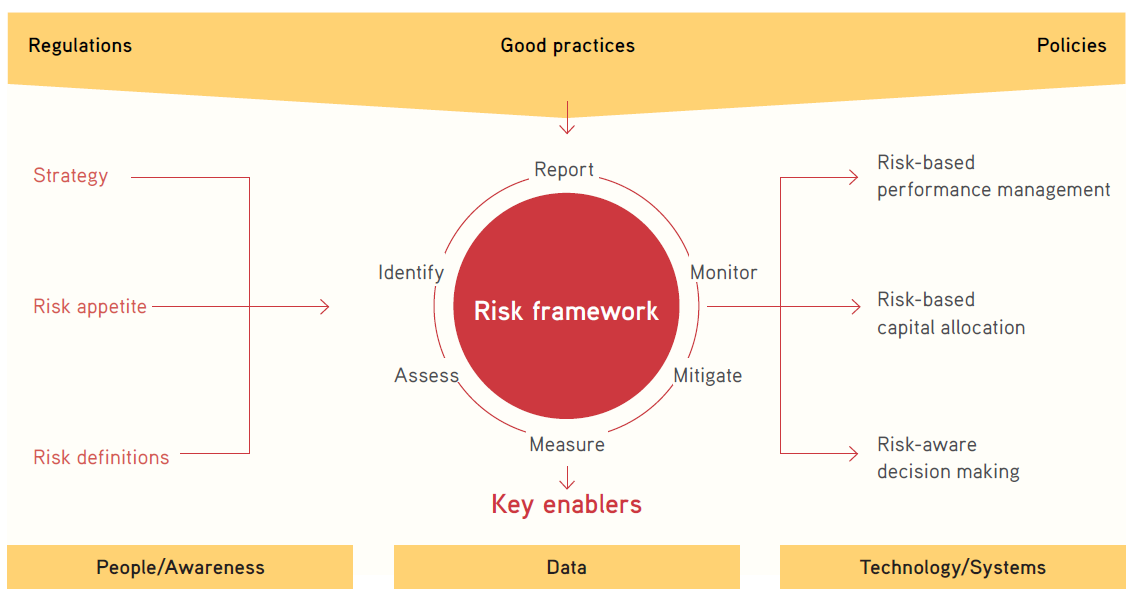
In a dynamic housing finance landscape, risk governance is essential to institutional resilience. Our multi-layered Risk Management Framework is overseen by:

Board-level Risk Management Committee (RMC) – Approves and governs the risk appetite and framework

Executive RMC – Reviews key risk indicators across business functions

Internal Audit – Independently assesses risk controls and governance effectiveness

Compliance Function – Monitors adherence to statutory and regulatory requirements
Each business unit has its respective risks, with clear accountability across verticals. In FY25, we continued to strengthen data-backed risk evaluation mechanisms and early warning systems to stay ahead of potential vulnerabilities.
Regulatory compliance and transparency
PNB Housing Finance complies with applicable laws and regulatory requirements from RBI, NHB, SEBI, MCA, IRDAI and other authorities. In FY25, we maintained high standards in compliance with regulations covering:

Deposit mobilisation,
SLR and KYC/AML

LCR, capital adequacy and
credit rating

Fraud monitoring and
SARFAESI procedures

Related-party transactions and
corporate governance disclosures
We maintained Liquidity Coverage Ratio (LCR) well above the minimum requirement, throughout FY25.
Strengthening AML and risk controls
Our Anti-Money Laundering (AML) and Know Your Customer (KYC) framework is aligned with RBI regulations and the Prevention of Money Laundering Act, 2002. Key features include:
Risk-based customer
due diligence
Customer acceptance
and identification policies
Real-time
transaction monitoring
Periodic employee
training on AML practices
The Company conducts regular risk assessments to identify and mitigate potential exposure to money laundering and terrorism financing.
Policy framework and governance architecture
A suite of policies that strengthen our governance structure, are approved by the Board and periodically reviewed. Such policies include:
Code of Conduct for
Directors and Employees
Whistle-
blower Policy
Prevention of Sexual
Harassment (PoSH)
Fair
Practices Code
Customer Grievance
Redressal Framework
Succession
Planning Policy
Anti-Bribery and Anti-
Corruption Policy
Outsourcing and Vendor
Risk Management Policy
Information Security & Cyber
Risk Management Policy
These policies are accessible to employees and stakeholders, with regular training and updates to ensure understanding and compliance.
Diversity and inclusion at the Board level
We recognise diversity as a critical enabler of robust governance and better decision-making. Our Board Diversity Policy supports inclusivity across gender, experience, expertise, age, and background. In FY25, the Board comprised individuals with varied academic credentials and professional experience across banking, housing finance, risk management, technology, and governance.
This breadth of insight helps us stay agile in the face of complex challenges and ensures we continue delivering value in a fast-evolving business environment.
Tech-driven governance practices
PNB Housing Finance continued to invest in digital governance systems during FY25. We implemented:
Enhanced Board and Committee
reporting dashboards
Data-driven compliance tracking
AI-enabled internal
audit tools
Automated monitoring of
regulatory alerts
These tools increase accuracy and timeliness, provide the Board with greater visibility into operational and compliance metrics.

Inbound contact centre
performance dashboard
In FY25, we operationalised a real-time dashboard to track key parameters such as call drop ratio, TAT, repeat queries, and resolution speed. It promotes accountability and reinforces our value of customer centricity. Employees exceeding performance thresholds are recognised, and training gaps are addressed immediately creating a responsive service culture underpinned by data.