





TABLE OF CONTENTS
Making home ownership simpler, smarter and more accessible.
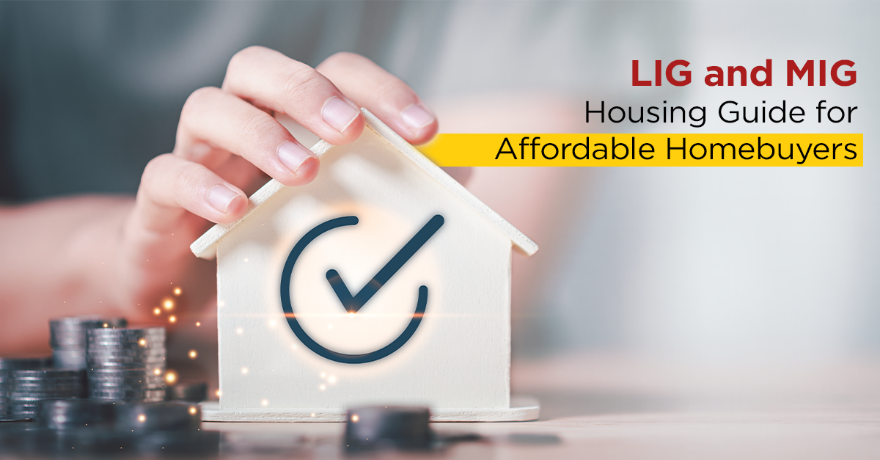
Owning a home is more than just a milestone, it’s a solid foundation for life. And in 2025, when housing costs keep climbing, you need a partner who understands affordability. At PNB Housing, we’re committed to helping you navigate the affordable-housing landscape, whether you’re a first-time buyer, a freelancer with informal income, or a salaried professional.
In this article, we’ll cover:
- What “affordable housing finance” means today
- The benefits of taking a home loan through PNB Housing
- Eligibility criteria and documentation required
- Key schemes: PMAY 2.0, NHB-linked subsidies, and state-specific initiatives
- How you can make your home-loan journey smoother
So, let’s dive in.
What Is Affordable Housing Finance?
Affordable housing finance is all about providing you with a practical, fitting home-loan solution that doesn’t over-stretch your budget. It involves:
- Simplified eligibility for lower-to-middle-income applicants
- Higher funding ratios (so you don’t need extremely large down-payments)
- Longer tenures to keep EMIs manageable
- Special subsidies or support from government schemes
At PNB Housing, this means we combine our product strength with schemes like the Roshni Home Loan and PMAY 2.0 so that home-ownership becomes genuinely accessible.
Why Affordability Matters in 2026
- Real estate costs are still rising in many cities and towns
- Income patterns are changing — more freelance, informal income, and small business owners
- Government policy focus is increasingly on “Housing for All”, which means more support mechanisms
For you, an affordable loan means less EMI burden and more financial freedom.
Affordable Housing Solutions
Here are the key vehicles we offer you to access affordable housing finance.
1. PMAY 2.0 Subsidy Route
Under the national mission for affordable housing, PMAY 2.0 (particularly the urban vertical) offers interest subsidies on home loans when you apply through approved mortgage lenders like PNB Housing.
Key features:
-
It targets EWS (Economically Weaker Sections), LIG (Lower Income Groups) and MIG (Middle Income Groups) households.
-
The subsidy under the ISS (Interest Subsidy Scheme) can be up to ₹ 1.80 lakh for eligible beneficiaries.
-
Eligibility bands: Annual household income up to approx. ₹ 3 lakh (EWS), ₹ 6 lakh (LIG), ₹ 9 lakh (MIG) in many cases.
-
Property cost and loan limits: For example, property value up to ₹ 35 lakh may be covered.
This means, if you qualify under these income categories, you can benefit from reduced interest burden via PNB Housing.
2. NHB-Linked Subsidy Schemes & State-Specific Housing Schemes
The National Housing Bank (NHB) plays a critical role in enabling affordable housing finance:
-
It provides refinance and interest-subvention schemes to institutions like housing finance companies (HFCs).
-
Its schemes help lenders pass on benefits to borrowers, especially in lower-income segments.
On the state front, many Indian states run state-specific affordable housing initiatives (often via their housing boards or development authorities) which can converge with central schemes like PMAY-2.0 or with lender offers like ours.
-
In addition to national subsidies, you may be eligible for state-level benefits and concessions
-
Being aware of state schemes can enhance your affordability, when coupled with PNB Housing’s product offerings
PNB Housing’s Roshni Home Loan – Solution for Affordable Housing Loans
The Roshni scheme is designed by PNB Housing Finance for households that may not fit the traditional “high-income” model but are steady and credit-worthy.
Highlights:
-
Loan range: ₹ 5 lakh to ₹ 50 lakh
-
Household income eligibility: from around ₹ 10,000/month (including combined income)
-
Tenure: up to 30 years (subject to applicant’s age at maturity ≤ 70 years)
-
Funding ratio: up to ~90% of property value (in eligible cases)
If your income is modest or informal, Roshni gives you a realistic pathway.
Benefits of Affordable Housing Finance with PNB Housing
When you choose PNB Housing’s affordable housing solutions, you gain:
-
Lower EMI pressure: Longer tenure + higher funding + subsidies = manageable monthly payments
-
Higher funded amount: With funding ratios up to ~90%, you don’t need huge upfront cash
-
Inclusive eligibility: Even self-employed, freelancers or informal income earners are included via Roshni
-
Subsidy advantages: Via PMAY 2.0, you may qualify for interest relief up to ~₹ 1.80 lakh
-
Partnered delivery: You get the backing of PNB Housing; well-known, reliable, experienced
Eligibility Criteria: What You Should Know
General Criteria for PNB Housing Home Loans
-
Minimum age: 21 years; your loan must mature by age 70 years
-
Credit score: Target at least 611 or higher for loan at PNB Housing.
-
Income: For salaried applicants typically ₹ 15,000/month or more; self-employed need documented business continuity
-
Property: Approved plan, clear title, meets PNB Housing’s norms
Roshni Home Loan – Additional Flexibility
-
Household income: From ~₹ 10,000/month (or combined income)
-
Loan amount: from ₹ 5 lakh to ₹ 50 lakh
-
Tenure: Up to 30 years (within age maturity constraints)
-
Less formal income documentation required compared to standard loans
PMAY 2.0 – Eligibility Highlights
-
Annual household income cap: about ₹ 3 lakh (EWS), ₹ 6 lakh (LIG), ₹ 9 lakh (MIG) in many cases
-
You should not own a “pucca” house anywhere in India (depending on the scheme vertical)
-
Property & loan limits: Example: loan up to ~₹ 25 lakh and property cost up to ~₹ 35 lakh in some states for subsidy eligibility.
Documents Required
Here’s the checklist for you to get ready.
Salaried Applicants
-
PAN, Aadhaar, Passport, or Voter ID
-
Last 3 months’ salary slips
-
Form 16 or latest ITR
-
Last 6 months’ bank statement showing salary credits
-
Appointment/confirmation letter
-
Property documents: Title deed, approved plan, sale/allotment letter
Self-Employed / Informal Income Applicants (especially under Roshni)
-
PAN, Aadhaar, etc for identity
-
Business registration/licence or proof
-
ITR of last 2–3 years (if available) or alternate income proof
-
Bank statements (6–12 months)
-
Property documents as above
For PMAY 2.0 Subsidy
-
KYC (ID, address proof)
-
Proof of income category (EWS/LIG/MIG)
-
Declaration of no pucca house in family, if required
-
Property and loan documents meeting scheme criteria
How Much Loan Could You Get?
With PNB Housing you can estimate early: use the online eligibility calculator.
Key inputs: your income, loan tenure, interest rate, existing EMIs.
For example: If you have modest income and opt for the longer tenure under a Roshni-type product, you may qualify for a meaningful loan amount with manageable EMI.
Remember: reducing existing EMIs, improving credit score, choosing a longer tenure and leveraging subsidy schemes (PMAY 2.0) all boost your eligibility.
Tips to Improve Your Eligibility
Here are some practical pointers:
-
Keep your credit score in good shape; pay EMIs and cards on time
-
Clear off or reduce smaller loans/credit card dues
-
Opt for longer tenure when affordable, it lowers EMI
-
Add a co-applicant if it helps your income eligibility
-
Choose property with clear legal status, fewer surprises
-
For informal income: maintain consistent bank statement entries showing funds
Frequently Asked Questions (FAQ)
Q. What exactly is affordable housing finance?
It’s a home-loan solution designed for affordability, lower income criteria, higher funding, longer tenure, possibly with subsidies.
Q. Can I avail subsidy through PNB Housing for an affordable home?
Yes. If you qualify under PMAY 2.0 and take a loan via PNB Housing, you may receive interest subsidy (up to ~₹ 1.80 lakh*) which lowers your cost.
Q. What’s the Roshni Home Loan?
It’s PNB Housing’s scheme for lower/middle income or informal income individuals. Loan from ₹ 5 lakh to ₹ 50 lakh, income eligibility from ~₹ 10,000/month, and tenure up to 30 years.
Q. Do I need formal income for the Roshni scheme?
Less stringent compared to standard loans. For informal income, consistent bank-statements matter.
Q. What’s the credit-score threshold?
For standard loans you’ll see minimums around 611; higher always helps for PNB Housing.
Q. What if my state has its own housing scheme?
Great, state-specific schemes often work alongside or in convergence with PMAY 2.0 or NHB-subsidy programmes. PNB Housing can help you navigate those too.
Final Thoughts
Home ownership should be more than a dream, it should be within reach. With PNB Housing’s affordable housing finance solution coupled with Government schemes (PMAY 2.0 subsidy route, etc.), you’re equipped with the right tools, support, and clarity.
Prepare your documents, check your eligibility, link with us - your path to home-ownership in 2025 becomes much smoother and smarter.
PNB Housing – Bringing Homeownership Closer to you, affordably. Pakka
*T&C apply