




TABLE OF CONTENTS
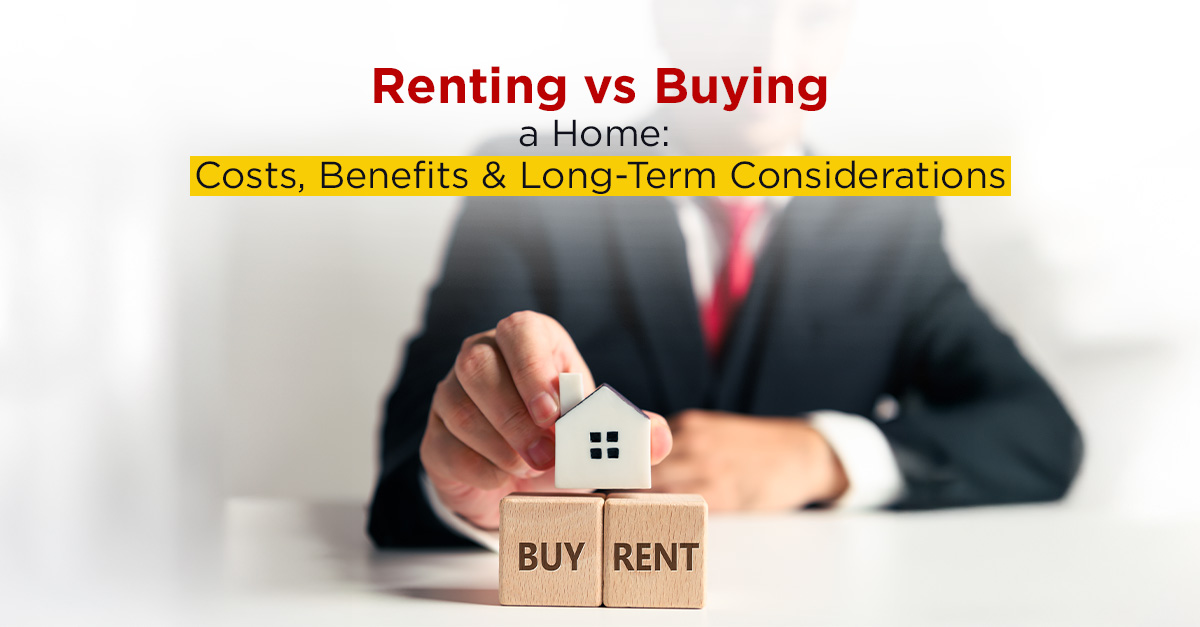
One of the most common dilemmas for individuals and families is whether to rent or buy a home. On the surface, paying rent each month may appear easier, while owning a home represents long-term commitment and security. But when you weigh the financial aspects, lifestyle factors, and future goals, the choice between renting vs buying a home becomes far more complex.
There is no single answer that suits everyone. The right decision depends on your personal circumstances, income stability, and long-term financial goals. Let us break down both sides to help you decide which is smarter in the long run.
Renting a Home
Renting is often seen as the flexible and convenient option, especially for young professionals or those who frequently move for work. Rental yields in India typically range from 3% to 5% of a property’s value, making renting a home relatively inexpensive compared to buying.
Some key advantages of renting include:
Lower upfront costs:
No need to pay a large down payment or stamp duty, which makes renting attractive for people with limited savings.
Mobility:
If you need to relocate, changing homes is simple. You are not tied to a specific location or property.
No maintenance worries:
Repair and renovation responsibilities generally fall on the landlord, not the tenant.
Tax exemption on HRA:
If you are a salaried employee and receive House Rent Allowance (HRA), you can claim tax exemptions under certain conditions.
However, rent does not build an asset. Once you vacate the property, there is no lasting value to show for the years of payments made.
Owning a Home
On the other hand, owning a home provides long-term stability and financial growth. It is often considered one of the most significant milestones in a person’s life.
Some major advantages of buying a home vs renting are:
Peace of mind:
No lease renewals, no landlord restrictions, and complete freedom to make the home truly yours.
Financial security:
Home ownership is often viewed as a symbol of stability and financial accomplishment.
Tax benefits:
Under Section 80C, you can claim deductions up to ₹1.5 lakh on the principal repayment of your home loan. Section 24 offers deductions up to ₹2 lakh on interest paid for self-occupied property, and even higher for rented-out properties.
Asset creation:
Unlike rent, EMIs gradually build ownership in a property that has long-term value.
Appreciation:
Real estate in India tends to appreciate over time, often outperforming inflation and other forms of investment.
Of course, buying requires significant financial planning, a down payment, and regular EMI commitments. But the value you create over time makes it an appealing option.
Key Differences Between Renting and Buying
When evaluating the pros and cons of renting vs. buying a home in India, several key factors stand out.
Property Values / Investment Potential
Renting does not give you any share in the rising value of property, while buying allows you to benefit from appreciation. For example, a flat worth ₹50 lakh today may be worth ₹70 lakh or more in 10 years, adding to your net worth.
Tax Benefits
Renters can claim HRA exemptions, but buyers enjoy broader tax deductions through Sections 80C and 24, making ownership financially rewarding in the long run.
Costs Comparison
Renting has lower upfront costs but no return on investment. Buying requires a down payment and EMIs, but the same monthly outflow builds ownership in a property that appreciates.
Impact of Economic Conditions on Renting vs. Buying
The decision can also depend on the broader economy. During times of high interest rates, EMIs can become burdensome, making renting appear cheaper. On the other hand, during low interest rate periods, like those recently offered by PNB Housing, buying becomes more attractive as borrowing costs drop.
Inflation also plays a role. While rent typically rises every few years, a fixed-rate home loan allows you to lock in EMIs, shielding you from rising housing costs in the long term.
The Role of Personal Circumstances in Renting or Buying
Your financial situation, career stage, and lifestyle aspirations should guide the choice. For example:
- If you are early in your career and may relocate, renting may suit you better.
- If you plan to settle in one city, buying ensures stability and asset creation.
- If your income is stable and you can manage EMIs comfortably, home ownership is a wise long-term move.
Every individual’s priorities are different, which is why it’s important to evaluate carefully.
How to Evaluate Your Readiness for Home Ownership
Before deciding to buy, ask yourself:
- Do I have enough savings for a down payment and related charges?
- Is my income stable enough to manage EMIs without strain?
- Am I planning to stay in this city for at least 5–10 years?
- Is my credit score strong enough to qualify for competitive home loan rates?
If the answers are largely positive, buying may be the smarter choice. Using a home loan eligibility calculator can help you check how much loan you can get and what EMI to expect.
Role of Home Loans in the Buying Decision
Home loans bridge the gap between savings and property prices, making ownership possible for middle-income buyers. Housing finance companies like PNB Housing offer attractive floating and fixed interest rate options, with loan disbursals in as little as 7 days.
Moreover, repaying a home loan not only builds ownership but also helps improve your credit score, opening doors to better financial opportunities in the future.
Conclusion
When weighing renting vs buying a home, the choice depends on your financial readiness, stability, and long-term goals. Renting offers flexibility, but buying delivers peace of mind, tax benefits, and wealth creation through property appreciation.
While there is no one-size-fits-all answer, those who can manage EMIs comfortably and plan to stay in one place for several years often find buying the smarter decision. With the right lender, the journey becomes even smoother. PNB Housing Finance offers attractive home loan products designed to help you step into your dream home sooner rather than later.
FAQs
Can I get tax benefits on buying a home?
Yes. Under Section 80C, you can claim deductions on principal repayment, and under Section 24, you can claim deductions on interest paid.
What are the financial risks of buying a home versus renting one?
Buying involves upfront costs, EMIs, and potential market risks. Renting avoids these but does not create long-term value.
Does property appreciation make buying a home a better choice?
Yes. Property values in India generally rise over time, offering strong investment potential in addition to providing shelter.
How do personal circumstances affect the decision to rent or buy?
If you plan to move frequently, renting is convenient. If you are ready to settle, buying is smarter for long-term security and growth.