




TABLE OF CONTENTS
- Eligibility Criteria for Tax Deduction According to Section 80EE
- Who Can Access Tax Benefit Deductions Under Section 80EE
- Who Cannot Access Tax Benefits Under Section 80EE
- Steps to Claim Tax Benefits on Your Home Loan
- Prepare the Property and Home Loan Documents Required
- Submit Documents to Your Employer
- Conclusion
- FAQs
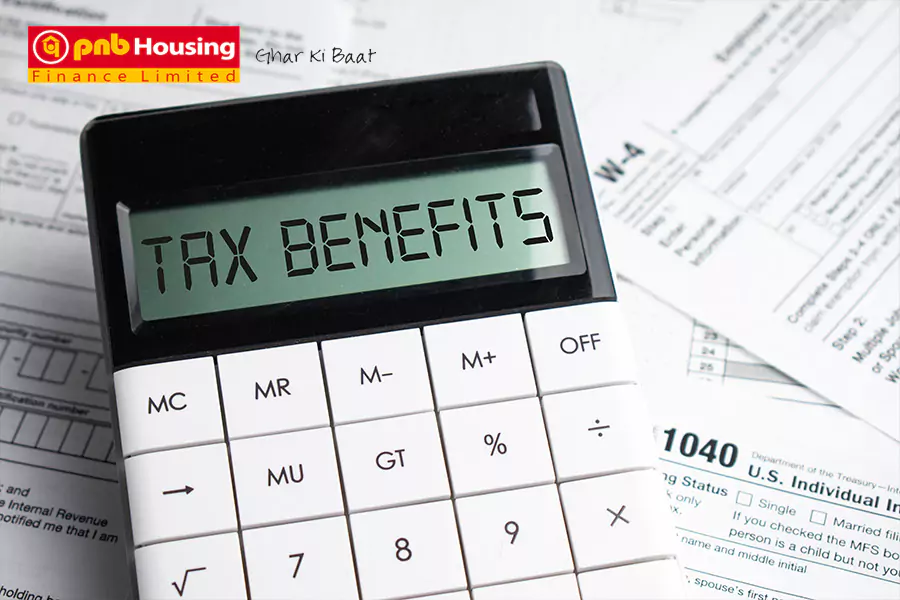
Section 80EE is a crucial tax-saving provision for first-time home loan buyers in India. If you are a new homebuyer and want to save up to ₹50,000 on your home loan interest every year, here’s everything you need to know about this provision of the Income Tax Act.
Let’s begin with knowing the eligibility criteria for tax deduction under this section!
Eligibility Criteria for Tax Deduction According to Section 80EE
- Property value ≤ ₹50 Lakh
- No other residential property owned on loan sanction date
- Apples to the residential property only
- Home loan ≤ ₹35 Lakh
- The loan must be sanctioned by a financial institution or a housing finance company
- The loan must be sanctioned between 01.04.2016 to 31.03.2017
To understand how you can claim tax benefits on home loan interest, refer to our detailed guide on Section 24 of the Income Tax Act.
Categories of Groups or Persons Who Can Access Tax Benefit Deductions Under Section 80EE
- First-time home buyers with no other residential property who bought a home through a loan.
- An individual taxpayer qualifies for tax deduction under Section 80EE.
- Co-borrowers individually qualify for tax deductions under Section 80EE.
People can qualify for tax benefits irrespective of whether they are residing in the bought house or if they rent it out
Categories of Groups or Persons Who Cannot Access Tax Benefits Under Section 80EE
- Tax benefits under Section 80EE do not apply to an association of persons, Hindu undivided families, or trusts of any kind.
- You cannot claim a deduction on a house property that is owned by your spouse, even if you take the loan; it can only be made if the spouse is a co-borrower or is nominated as a co-owner.
|
Eligible Individuals/Groups |
Ineligible Individuals/Entities |
|
First-time homebuyers are taking out a loan for a property. |
Entities such as Hindu Undivided Families (HUF), Trusts, or an Association of Persons (AOP). |
|
Individual taxpayers (this benefit is not for groups). |
An individual who takes a loan for a property that is owned solely by their spouse. |
|
Co-borrowers on the home loan, who can each claim the deduction individually. |
|
|
Individuals qualify regardless of whether they live in the property or rent it out. |
|
Steps to Claim Tax Benefits on Your Home Loan
Prepare the Property and Home Loan Documents Required
If you co-own the property, ensure it bears your name and the co-owner’s as well. Both of you can claim tax deductions individually. However, both co-borrowers will need to pay EMIs for tax benefits.
Ensure you also get a certificate from your lender indicating your loan and interest details. Remember, your home loan should have been approved to qualify for tax benefits according to Section 80EE.
Submit Documents to Your Employer
When claiming tax deductions on your home loan:
- Inform your employer once you buy or construct your home with a Home Loan. Your employer will then adjust TDS to reduce the amount deducted from your income for tax.
-
Wait till the end of the year, find tax liabilities, and make adjustments
If you aren’t employed, don’t submit any documents.
If you’re planning to buy an additional property, explore the tax benefits available on a second home loan in our detailed guide.
Conclusion
- Section 80EE is an Income Tax law that assures tax benefits when you use a Home Loan to buy or build a residential home. When filing your taxes, you can deduct up to ₹50,000 in interest paid.
- If the property is co-owned, the tax benefits can be claimed individually. However, the co-borrowers must pay EMIs and the property must be in both names to qualify for section 80EE deductions.
- Section 80EE tax deductions are only available for paid interest, not principal.
- To qualify for a tax deduction, the property purchased or built with a home loan must be worth less than ₹50 lacks. Furthermore, you should not own any other property by the time your Home Loan is approved.
FAQs
Who is eligible for Section 80EE tax deduction?
Only first-time homebuyers who are individual taxpayers are eligible. This deduction was specifically for home loans sanctioned in the financial year 2016-17, and you must not have owned any other residential property at that time.
What is the maximum tax deduction under Section 80EE?
The maximum tax deduction you can claim under Section 80EE is ₹50,000 per financial year. This is an additional deduction on the interest paid, over and above the ₹2 lakh limit available under Section 24(b) of the Income Tax Act.
Can NRIs claim Section 80EE tax benefits?
Yes. Non-Resident Indians (NRIs) can claim this deduction as long as they meet all the other eligibility criteria for Section 80EE and are filing an income tax return in India.
Is Section 80EE deduction applicable on co-owned properties?
Yes. If the property is co-owned and you are also a co-borrower on the home loan, you can claim the deduction. Each co-borrower who meets all the eligibility criteria can claim up to ₹50,000 individually.