




TABLE OF CONTENTS
For most borrowers, paying an EMI on time is one of the most important financial responsibilities each month. Whether it is for a home loan, a car loan, or a personal loan, EMIs are commitments that must be met consistently. However, sometimes payments fail. This situation is commonly referred to as an EMI bounce.
An EMI bounce may seem like a minor issue, but in reality, it can be costly and damaging in the long term. From attracting bounce charges to negatively impacting your credit score, the consequences can follow you for years if ignored. Let us take a closer look at what an EMI bounce means, why it happens, and how you can avoid it.
Causes of EMI Bounce
Several reasons can lead to a bounced EMI. While insufficient funds are the most common factor, they are not the only one.
Insufficient funds:
If your bank account does not have sufficient funds on the EMI due date, the payment will fail. This is the most frequent cause.
Technical errors:
Occasionally, glitches in the banking or payment system can cause an EMI bounce, even when sufficient funds are available.
Incorrect details:
If the bank account number or mandate information provided to your lender is wrong, your EMI may not be processed.
Cheque-related issues:
For borrowers paying through post-dated cheques, any error, such as a mismatch in signature or insufficient balance, will result in a bounce.
Regardless of the reason, lenders treat a bounce seriously and usually apply an EMI bounce charge.
What is EMI Bounce?
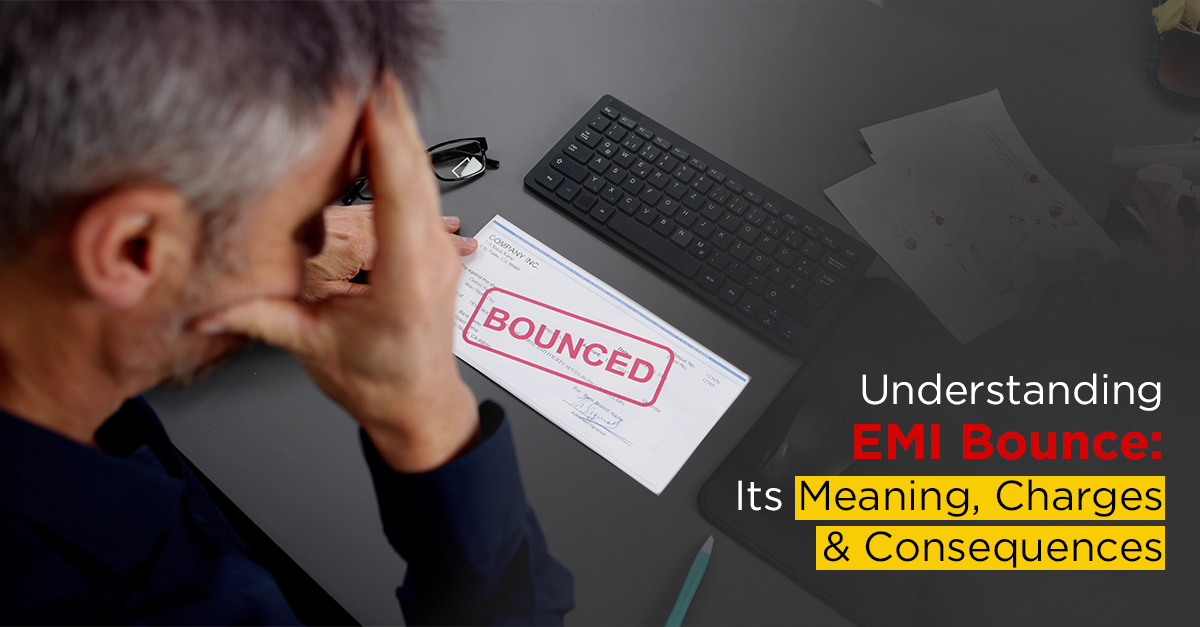
An EMI bounce occurs when the scheduled EMI for a loan is not processed successfully on the due date. The lender attempts to collect the EMI, but due to issues like insufficient funds or technical errors, the transaction is declined.
An EMI bounce is not just an additional fee. It is recorded as a missed payment, which directly affects your credit history. Repeated instances can negatively impact your creditworthiness and make future borrowing more challenging.
What are the Consequences of Home Loan EMIs Bouncing?
Failing to pay your EMI on time brings a range of consequences, both immediate and long-term.
Impact on credit score
An EMI bounce is reported to credit bureaus as a missed payment. Even a single missed EMI can cause your credit score to fall. A poor score can reduce your chances of getting future loans approved and can lead to higher interest rates being applied.
Delayed repayments
Since the EMI is not processed, it remains outstanding. This means you are immediately behind on your repayment schedule, which could extend your loan tenure unless you rectify the situation.
Legal implications
In rare cases, especially for repeated cheque bounces, lenders may take legal action under the Negotiable Instruments Act. While this is uncommon, it highlights the seriousness of avoiding EMI failures.
EMI Bounce Charges
Lenders impose bounce fees as a penalty and as compensation for administrative costs. These vary by lender and by loan type.
It is important to note that these charges are over and above the EMI amount itself. This means you still owe the original EMI plus the penalty. If not cleared promptly, these amounts can accumulate and make repayment even more difficult.
How to Avoid EMI Bounce Charges
While an EMI bounce can happen, with careful planning and discipline, it is entirely avoidable. Here are some effective ways to ensure your EMIs are always paid on time.
Maintain sufficient funds
The simplest step is to always keep enough balance in your bank account before the EMI due date. Setting reminders a few days in advance helps ensure you are prepared.
Set up auto-debits
Linking your loan account to your bank account for automatic EMI deduction is one of the best ways to avoid missed payments. Once set up, the EMI is debited directly without manual intervention.
Monitor your account
Make it a habit to check your bank balance and transaction history regularly. This helps you spot any issues in advance and ensures there is no surprise on the due date.
Contact your lender
If you know in advance that you might face difficulty in making a payment, inform your lender. Many lenders, including PNB Housing, are open to discussing solutions such as rescheduling payments or offering short-term relief in special cases.
Emergency fund
Maintaining a small emergency fund can also protect you from EMI bounces. This buffer ensures that unexpected expenses do not compromise your repayment obligations.
Conclusion
An EMI bounce may seem like a small slip, but its impact is both immediate and long-lasting. Whether you are paying a home loan or a personal loan, understanding how home loan EMI bounce charges and personal loan EMI bounce charge penalties work is crucial. By maintaining sufficient funds, setting up auto-debits, and monitoring your account regularly, you can stay ahead of your obligations and protect your financial health.
PNB Housing, like other responsible lenders, clearly outlines charges and expectations in its terms, ensuring borrowers are well-informed. By staying disciplined and proactive, you can ensure a smooth repayment journey and safeguard your creditworthiness for future needs.
FAQs
What should I do if my EMI payment bounces?
You should immediately deposit the required funds and contact your lender to clear the outstanding EMI along with the applicable bounce charge.
How does EMI bounce affect my credit score?
An EMI bounce is reported as a missed payment, which lowers your credit score and reduces your chances of getting loans approved at favourable rates.
How can I resolve EMI bounce issues quickly?
Ensure your account is funded and reattempt payment. If the issue was technical or due to incorrect details, correct the information and coordinate with your lender.
Are there any penalties for bouncing a home loan EMI?
Yes, lenders charge a penalty fee. For instance, PNB Housing applies ₹750 plus GST for the first bounce and ₹1,000 plus GST for the second with the same instrument.
Can an EMI bounce affect my future home or personal loan applications?
Yes, repeated EMI bounces damage your credit history, making lenders hesitant to approve future loans or offering them only at higher interest rates.